Category: Guide

  • You Don’t Have to Practice Alone

    You Don’t Have to Practice Alone

    One of the hardest parts of practicing an instrument is the loneliness.

    For instruments like the piano, both practicing and performing are often solitary activities.
    But even with other instruments, practicing alone is something every musician must face.

    How well am I actually doing?
    Am I really improving?

    Almost every musician has experienced the uncertainty of judging their own progress.
    Sometimes the results are unclear, and the motivation fades.

    If you have friends nearby who also play music, that can be a great source of support.
    But not everyone has that kind of environment.

    terakoyaCloud was created to ease this sense of isolation.

    As explained earlier, the Practice Log allows you to record your practice sessions.
    This helps you review what you’ve done and clarify your next goals.

    But that’s not all.

    Your logs appear in the Feed, where they are displayed alongside the practice logs of others.

    By seeing how others practice, you may discover new ideas.
    At the same time, your own approach might help someone else.

    However, there is an important principle here:

    Privacy.

    On terakoyaCloud, the focus is not on who posted something.

    Instead, the emphasis is on the practice itself.

    You can also choose the visibility of each log:

    • Private — visible only to yourself
    • Member Only — visible to terakoyaCloud members
    • Public — visible to anyone on the internet

    And you can decide this for every single post.

    When you’re trying something new and feel unsure, you might start with a private log.
    Later, once you feel more confident, you can choose to share it.

    There is another clear difference from typical social media platforms.

    There are no “likes.”
    There is no follow system.

    This space is not designed for chasing approval.
    It is designed so you can record your practice at your own pace, without pressure.


    When You Want Feedback

    Of course, there are times when you want advice.

    You might think:

    “Am I doing this right?”
    “Maybe someone else could give me a hint.”

    For those moments, terakoyaCloud offers the Invite feature.

    There are two ways to request feedback.

    Open Invite

    You can invite anyone to give feedback on your log.

    Direct Invite

    You can send an invitation directly to someone you trust or respect.

    Responding to an invitation is always optional.
    No one is obligated to reply.

    There are no hierarchies or expectations here.

    You decide when to share.
    You decide when to ask for help.

    This freedom is part of the culture of terakoyaCloud.


    When You Don’t Know What to Practice

    Sometimes you simply don’t know what your focus should be.

    That’s okay.

    You can leave the Focus field empty and simply post a photo or video of your practice.

    Then you can share it through an Open Invite, and others may offer suggestions.

    Someone might say:

    “Maybe you could try focusing on this.”

    Your goals don’t have to be clear from the beginning.
    Sometimes they emerge along the way.


    A Modern Terakoya

    Practicing an instrument can feel like a long and lonely journey.

    But imagine looking around and realizing
    there are others walking the same path.

    People who quietly support each other.

    That is the kind of place terakoyaCloud hopes to become.

    Record your practice.
    And if you can, help someone else along the way.

    Your experience level doesn’t matter.

    Anyone can become someone else’s support.
  • Goal Setting for Deeper Practice: Focus and Context

    Goal Setting for Deeper Practice: Focus and Context

    When you practice an instrument like piano or violin, what exactly are you trying to improve?

    At terakoyaCloud, we divide practice goals into two different categories:

    Focus and Context.

    Both are goals in a broad sense, but they play very different roles in how we think about practice.


    Context: Goals with a natural endpoint

    A Context is a goal that has a clear boundary.

    For example:

    • Preparing for a concert, recital, or competition
    • Practicing a specific piece
    • Working toward an upcoming performance

    If you are practicing Beethoven’s Für Elise, that is a Context.

    If you are preparing for a recital next month, that is also a Context.

    Contexts eventually reach an endpoint.
    The piece is performed. The event happens. The preparation phase ends.

    Because of that natural boundary, we call these Contexts.


    Focus: Continuous improvement

    A Focus is different.

    A Focus is something you are continuously trying to improve in your playing, regardless of the piece or event.

    For example:

    • reacting clearly to dynamics such as forte, piano, or crescendo
    • keeping sixteenth notes even
    • maintaining a balanced posture
    • avoiding the habit of rushing the tempo

    These issues appear across many pieces.

    You might notice the same problem while playing Für Elise, Mozart’s Turkish March, or any other piece you work on.

    A Focus is not tied to a specific work.
    It is a broader challenge that affects your overall musicianship.

    Improving a Focus improves your playing everywhere.


    Why separate them?

    At first, this way of thinking might seem a little detailed.

    But organizing practice this way helps increase the resolution of how we listen to and think about music.

    Instead of practicing only pieces, you begin to notice the underlying elements of your playing.

    This deeper awareness allows you to explore music more fully—and enjoy it for a much longer time.

    And interestingly, the habit of increasing this kind of “resolution” often extends beyond music.
    It becomes a way of understanding many other things more clearly as well.


    Learning from each other

    Later articles will explore this more deeply, but there is another important reason we emphasize Focus.

    When many musicians share their Focus inside terakoyaCloud, something interesting begins to happen.

    Musicians start learning from each other.

    Someone else’s practice approach might inspire your own.
    And your own discoveries might become the spark for someone else.

    Practice stops being an isolated activity.

    It becomes a shared process of exploration.


    What if you don’t know your Focus yet?

    For many beginners, this way of thinking about practice may feel unfamiliar.

    That’s completely okay.

    If you’re not sure what your Focus should be, simply record a short video of your practice (without showing your face or location if you prefer), upload it, and select “Not Sure” as your Focus.

    That’s essentially a way of asking the community for help.


    Remember: this is a terakoya

    In historical Japan, a terakoya was a place where people gathered to learn together.

    terakoyaCloud follows that same spirit.

    It’s not just a notebook where you record your own practice.

    It’s not a place where the teacher’s opinion is the only reference point.

    It’s a place where musicians share their challenges, learn from one another, and discover solutions together.

    Start by simply recording your practice.

    Over time, the important details in your playing will begin to reveal themselves.

  • Do You Feel Progress in Your Instrument Practice?

    Do You Feel Progress in Your Instrument Practice?

    Visualizing Your Practice: The terakoyaCloud Dashboard

    Do you feel that your instrument practice is steadily progressing?

    Music is enjoyable and can bring an extraordinary sense of joy.
    When you play an instrument, the emotion you feel in the sound you create may be something only those who truly love music can understand.

    Yet many musicians would probably agree on one thing.
    Playing an instrument is not always fun all the time.

    There are moments when progress feels slow, when you feel stuck, or when you stumble.
    Because of that, it’s not uncommon to see instruments that were once purchased with excitement now sitting quietly in the corner of a room.

    terakoyaCloud was created with a simple idea: to build an environment where people who start playing an instrument can continue enjoying music for as long as possible.


    Why It’s Hard to Feel Progress Even When You Practice

    You practice, yet you don’t feel like you’re improving.
    Have you ever experienced that feeling?

    You practiced yesterday.
    You practiced today.
    But whether that practice is truly moving forward is surprisingly difficult to recognize.

    For example:

    • What exactly you practiced last week
    • What challenges you were struggling with a month ago
    • What specific goals you were working toward

    Most people cannot clearly remember these things.

    Even though practice is accumulating, it can become invisible to us.
    And when that happens, we start to wonder if we’re actually improving at all.


    What Changes When Practice Becomes Visible

    What if your daily practice remained as a visible record?

    What you practiced yesterday.
    What you focused on.
    And what kind of results or feelings you had from that practice.

    When these small steps become visible, the overall flow of your practice starts to become clearer.

    Improvement in music rarely happens suddenly.
    Most of the time, it comes from many small trials and adjustments.

    By keeping a record of those small steps, practice changes from something you simply “keep doing” into a process you can actually see.


    The terakoyaCloud Dashboard

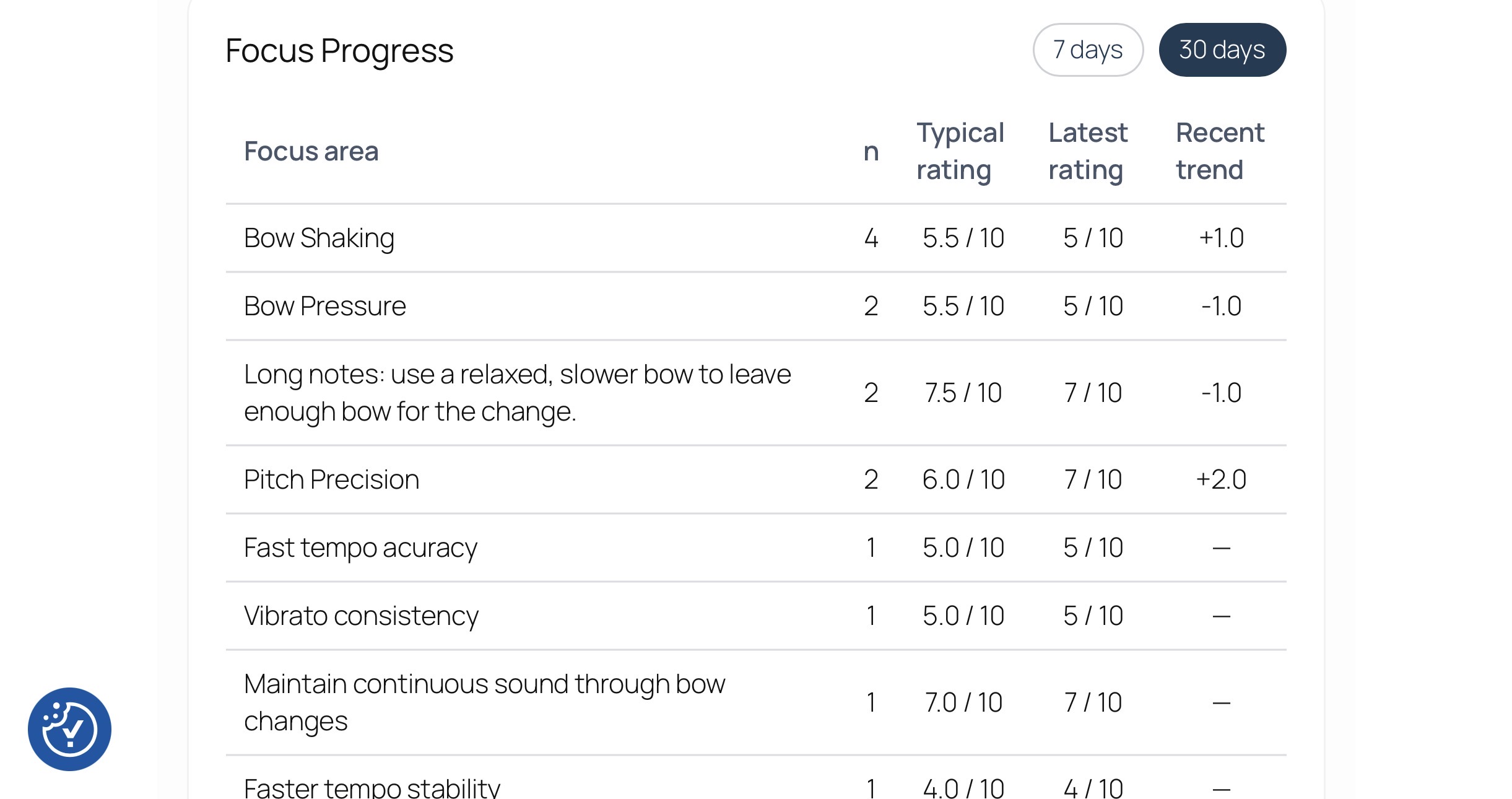
    terakoyaCloud provides a Dashboard where you can review all of your practice records in one place.

    On this page, you can see your practice in several different ways.

    For example:

    • How consistently you have been practicing
    • How many practice logs you have posted this month
    • What focuses or goals you are currently working on

    Each day of practice may seem small, but when those days accumulate, you begin to see your own personal progress.

    The Dashboard is the place where you can see that flow.


    How Are These Records Created?

    So how are the records displayed on the Dashboard actually created?

    In terakoyaCloud, daily practice is recorded as a Practice Log.
    As these logs accumulate, the Dashboard begins to show the progression of your practice.

    In the next article, we will introduce the Practice Log feature.
    How are these practice records created, and how do they build over time?

  • The Philosophy Behind the “Add a Practice Log” Form — TCPL as a Runway to the World

    The “Add a Practice Log” form in TCPL is not just a submission form.

    It is a runway before taking off into the world.

    This article records the meaning behind each section and why it was designed this way — so we never forget the core philosophy.


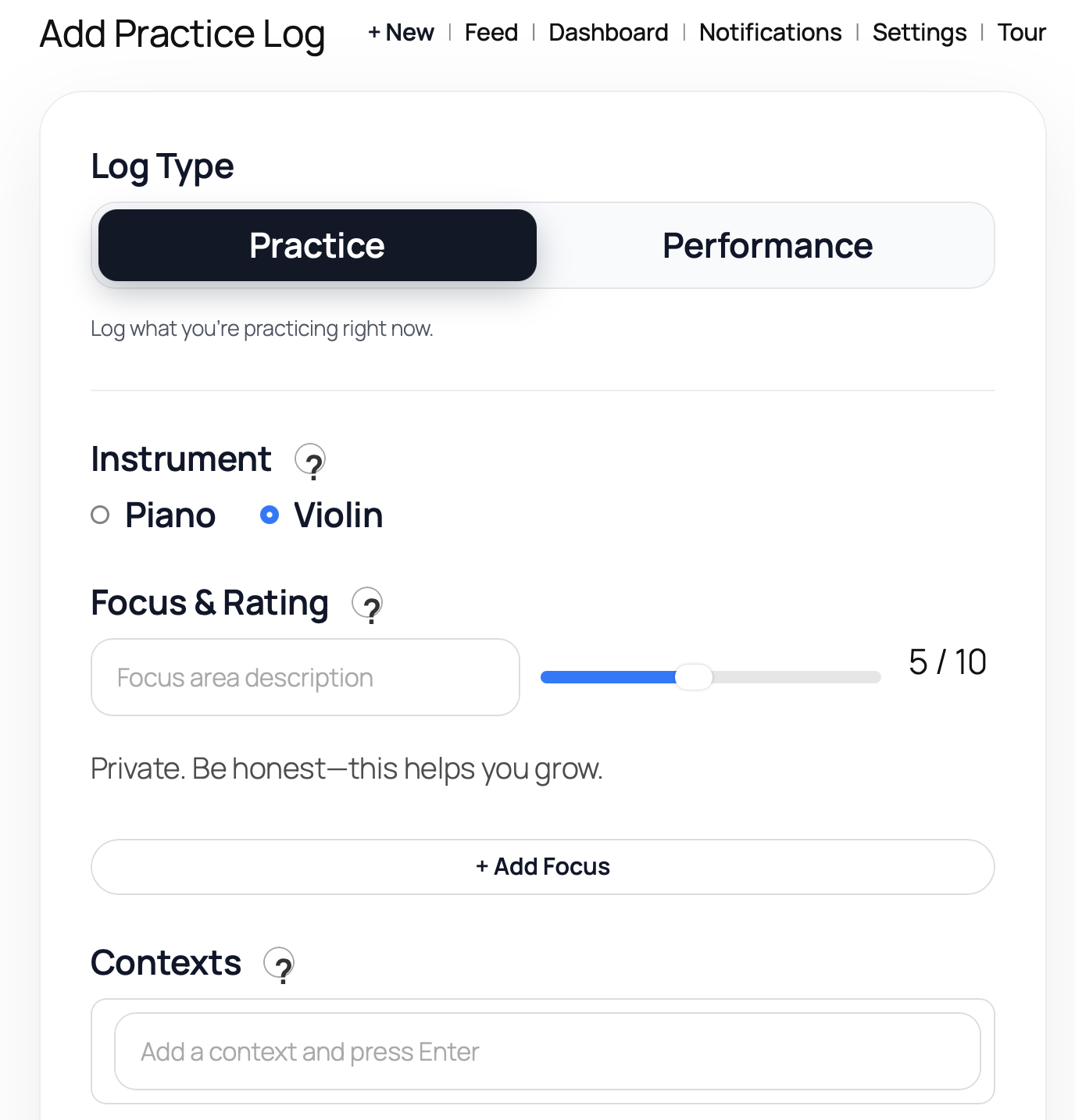
    1. Log Type (Set Focus / Working on / Performance)

    There are three phases of a practice log:

    • Set Focus: Declaring what you are about to work on.
    • Working on: A log of ongoing practice.
    • Performance: A more polished or completed version.

    TCPL is not a place only for finished performances. It is a place that values the process.


    2. Instrument

    Select your instrument. This is more than categorization — it connects to future value.

    • Feed filtering
    • Future analytics (trends, Focus, practice patterns)
    • Connecting musicians playing the same instrument

    3. Focus & Rating

    This section visualizes growth. Social media shows results. TCPL preserves the journey.

    The progress bar is not for others — it is for you to see your own growth.


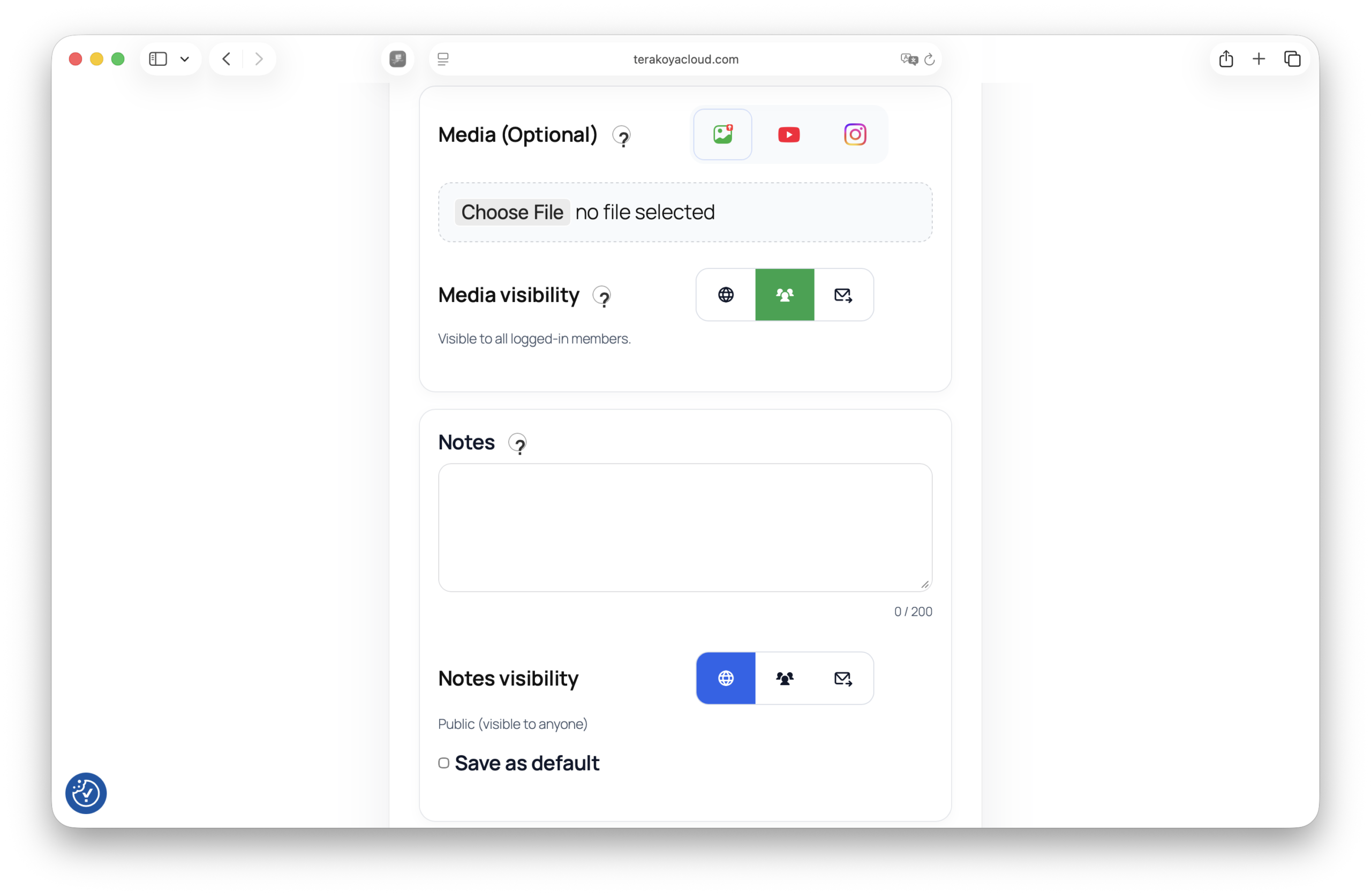
    4. Media (Optional)

    This is the heart of TCPL.

    TCPL is a place to speak through music, not through words.

    • Upload
    • YouTube
    • Instagram

    In the future, TCPL itself may become a stage for performance.


    5. Media Visibility (Core Design)

    This is the most important and most easily misunderstood part of the system.

    ① Members (Default)

    Visible only to logged-in TC members. This is the runway phase.

    • Not immediately exposed to the world
    • Shared with members who share the same philosophy
    • Relatively safer regarding copyright concerns

    ② Public (noindex mode)

    Visible to anyone with the link. However, currently configured as noindex (search engines blocked).

    • Reduces copyright exposure
    • Limits uncontrolled distribution
    • Allows controlled experimentation

    Public means: ready to take off.

    ③ Invited (Focused Feedback)

    Visible only to approved invitees (accepted or selected). Designed for serious, focused feedback.


    Important: Visibility and Invitations Are Separate

    • Visibility = Who can view the content
    • Invitation = Who can submit feedback

    Even if a log is Public, feedback can only be submitted through Invitations. These two systems must remain independent.


    6. Notes

    Notes provide context behind the music — intention, challenges, and reflections.

    Music is the main voice. Notes are supporting context.

    Notes Visibility

    • Private (Default): Only you can read your notes.
    • Invite-only: Only approved invitees can read them.

    Even if Media is Public, Notes can remain Invite-only. You may share your music with the world while keeping your inner thoughts limited to trusted viewers.


    Why Members Is the Default

    TCPL is designed as a training ground before stepping into platforms like X, Instagram, TikTok, or YouTube.

    Members = Runway

    Public = Takeoff

    Invited = Maintenance and fine-tuning


    What TCPL Ultimately Aims To Be

    Social media seeks reaction. TCPL seeks growth.

    TCPL is not meant to be a closed community. It is meant to prepare musicians to step into the world with confidence.

    For now, it is a runway. You run, refine, and then take off.